
Embroidery,
worn instead of framed.
In our Bathinda atelier, we preserve the slow, generational discipline of Punjabi needlework. Here is how each piece comes to life before reaching your wardrobe.
Where Patience Meets Pure Silk
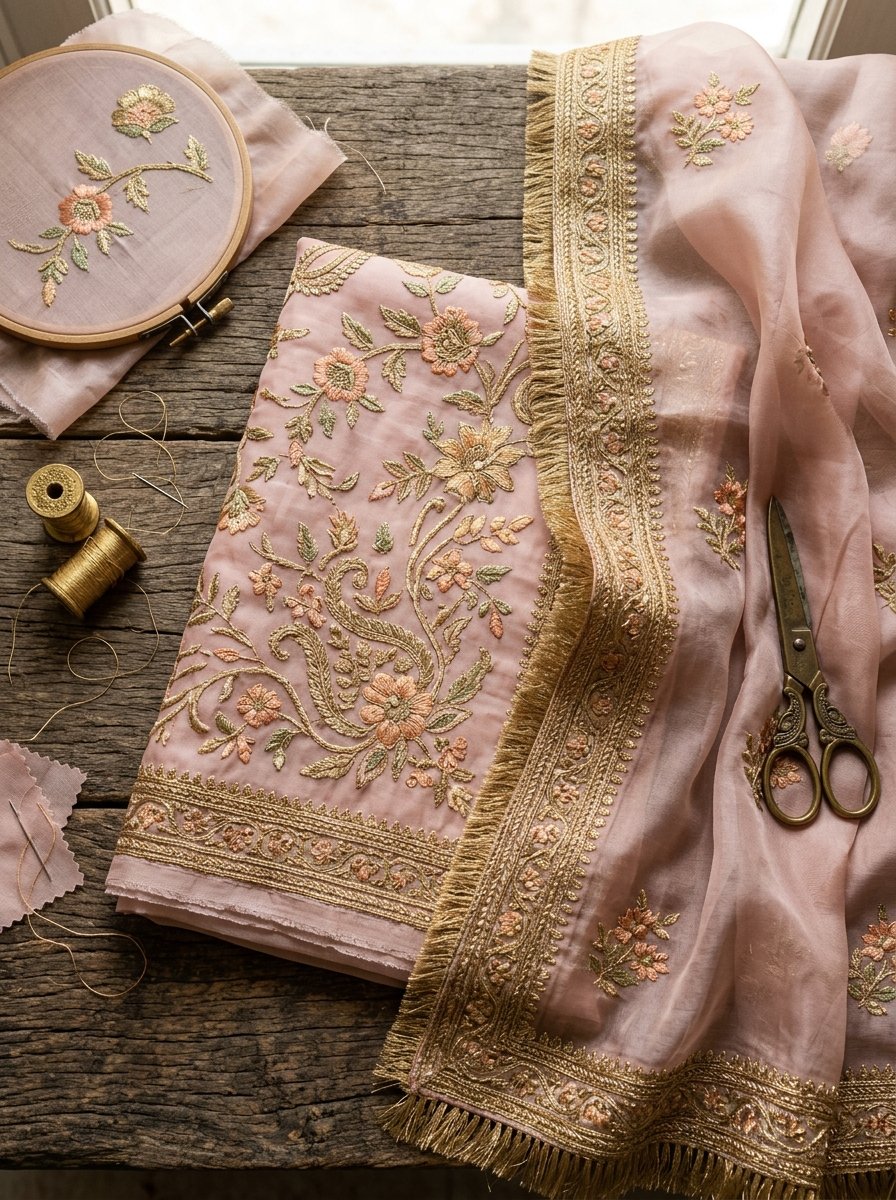
Every suit and cord set begins as an untouched length of pure handloom silk, Chanderi, or high-count mulmul. In an era of hurried digital printing, we choose the rhythm of wooden frames, copper thimbles, and single-needle resham threadwork.
A single dupatta can command 40 to 60 uninterrupted artisan hours. When you run your fingers across our pieces, the texture tells the story of human touch — tactile, dimensional, and enduring.
From the Wooden Frame to Your Hands
Tracing the Motif in Charcoal
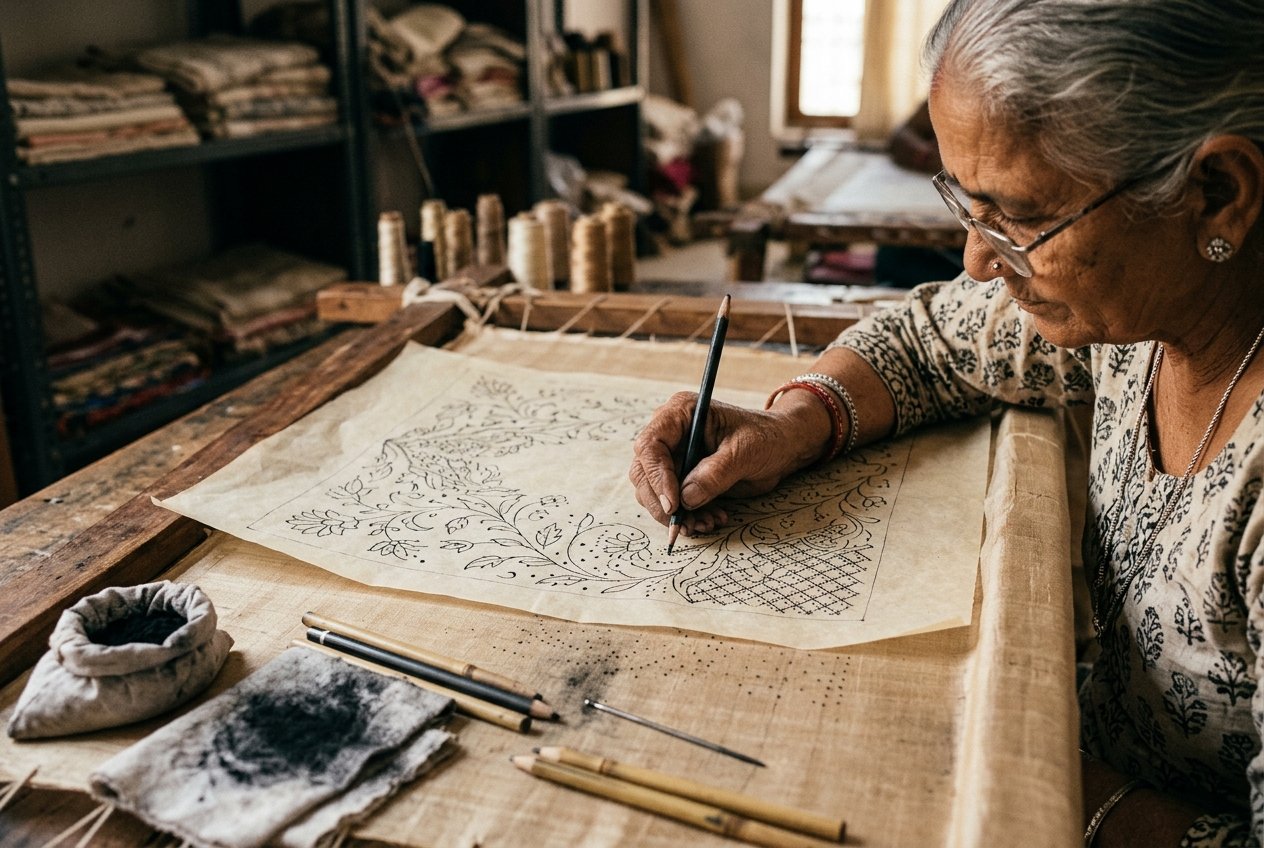
Our master draftsman creates bespoke botanical and geometric blueprints on butter paper, pricking micro-holes along the lines. Natural charcoal dust is swept across to transfer the design onto raw fabric.
Mounting the Wooden Frame
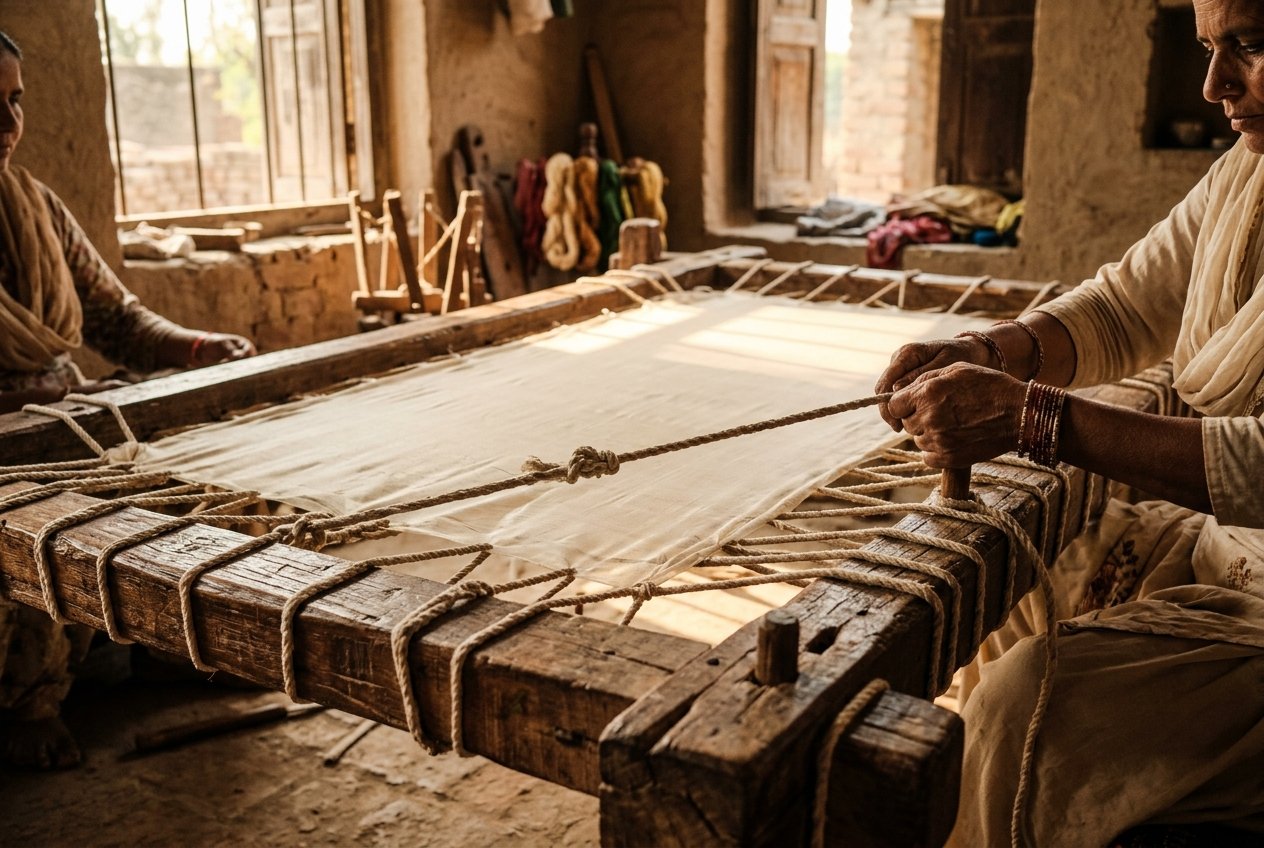
The fabric is secured onto heavy hardwood adda frames using tight cotton ropes. Maintaining uniform tension is vital so that stitches remain crisp without puckering delicate organza or raw silk.
Thread-by-Thread Needlework
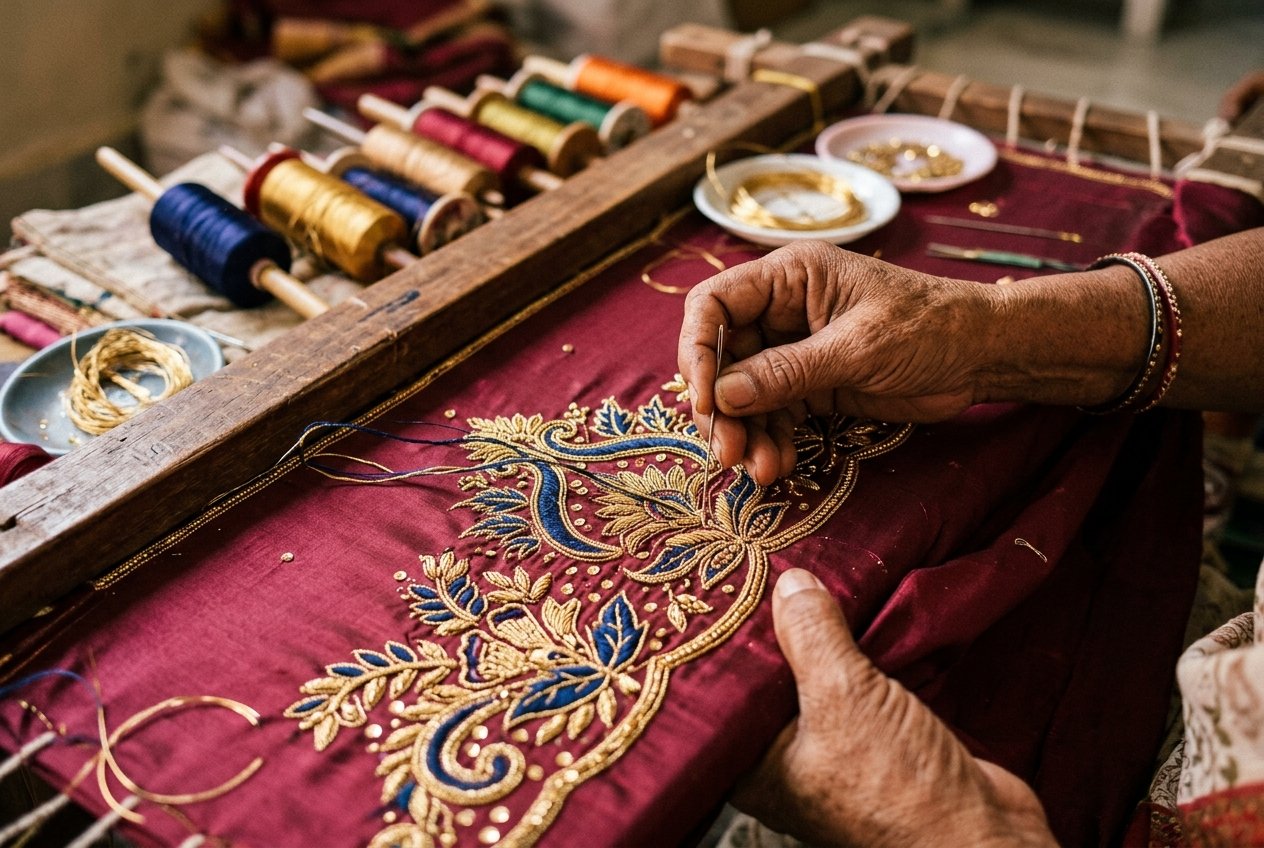
Sitting side by side, our karigars employ resham silk threads, antique tilla, sitara, and delicate aari hooks. Each petal, leaf, and border is filled with deliberate single-stitch precision.
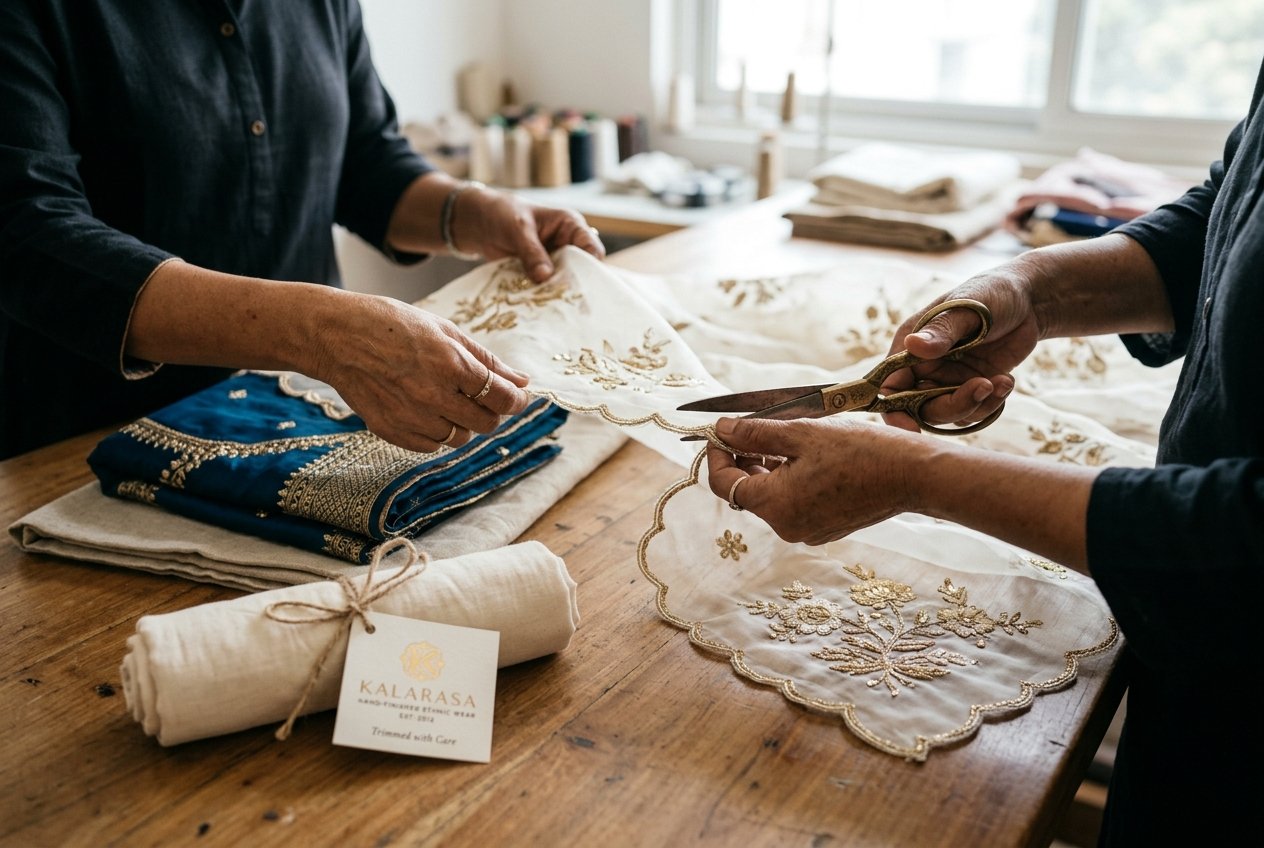
Finishing, Scalloping & Dispatch
Once released from the frame, edges are hand-scalloped or hemmed with potli buttons. Every piece undergoes rigorous daylight inspection before being wrapped in muslin and dispatched to your home.